What Does 1.7362 Mean?
1.7362 is a Werkstoff number, the material number used in the DIN and EN designation system for steels. Numbers in the 1.7xxx series identify alloy steels, and this particular number belongs to the chromium-molybdenum group covered by EN 10216-2, the standard for seamless steel tubes for pressure purposes. When a certificate or drawing states 1.7362, it refers to this low-alloy Cr-Mo grade and the requirements of the governing standard edition.
Chromium and molybdenum are the two alloying elements that define the performance of this steel family. Chromium raises the oxidation resistance and the strength of the steel at high temperature, while molybdenum increases the creep resistance and hardenability. Together they allow the tube to carry steady pressure for long periods at metal temperatures where plain carbon steel would lose strength. The exact limits for each element are defined by the applicable standard and are verified by the heat analysis on the certificate.
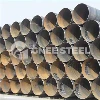
Seamless pipe is produced from a solid billet by piercing and rolling, so the finished tube has no weld seam. This gives uniform strength around the circumference, consistent wall thickness, and no risk of seam-related defects. For elevated temperature pressure parts, the seamless form simplifies design calculations and provides a proven long-service record.
| EN 10216-2, pressure tubes for elevated temperature | |
| Chromium-molybdenum low alloy steel | |
| High temperature, creep-resistant pressure parts |
The tube starts as a round billet that is heated and pierced into a hollow shell, then rolled or drawn to the required outside diameter and wall thickness. After forming, the tube is heat treated to develop the final microstructure. Normalizing produces a fine-grained structure, and tempering improves toughness while keeping the strength within the required range. Cold drawn tubes receive the same heat treatment after the final drawing pass.
Because the material number identifies only the steel, the order must also state the outside diameter, wall thickness, length, delivery condition, and the standard and its edition. For pressure service, the inspection certificate type should be agreed, and any supplementary requirements such as ultrasonic testing or impact testing at lower temperatures should be listed explicitly.
1.7362 seamless pipe is used in boiler plants, superheaters, heat exchangers, and high-pressure steam piping. Power generation and petrochemical facilities specify it for lines carrying hot gases, steam, and process fluids at elevated temperatures. The combination of creep resistance, oxidation resistance, and weldability makes it a reliable choice for critical pressure parts.
What standard covers 1.7362 pipe?
The grade belongs to the EN 10216-2 family, which covers seamless steel tubes for pressure purposes at elevated temperatures. The applicable edition of the standard defines the composition, mechanical properties, and testing requirements.
Is 1.7362 a stainless steel?
No. It is a low-alloy chromium-molybdenum steel with a modest chromium content. Stainless steels contain at least about 10.5 percent chromium and are defined by different standards.
Can 1.7362 pipe be welded?
Yes. The steel is weldable by standard arc welding processes. Preheating and post-weld heat treatment are normally required for pressure parts, and the welding procedure should be qualified under the applicable code.
The normalized condition is standard for this steel family, and normalized and tempered is specified when the design requires a defined toughness level. The delivery condition is always stated in the order and on the certificate.
Seamless tubes are available from small diameters of about 20 mm to large diameters beyond 600 mm, with wall thicknesses selected to suit the design pressure. Lengths from 6 m to 12 m are typical.
Each delivery is verified by heat analysis of the chemical composition, tensile testing, and additional tests such as flattening, impact, or ultrasonic examination when specified. The results are reported on the inspection certificate.